
GEO and AI Search Optimization in Columbus, Ohio

Get named when someone asks an assistant for a recommendation

A growing share of customers now ask ChatGPT or read the AI answer at the top of Google instead of scrolling the results. Those answers name two or three businesses and the person calls one of them. Being named is a different job from ranking a page, because the assistants assemble answers from entity data, citations and structured content rather than from position in a list.

Entities Structured data Citations AI Overviews Assistant tracking

4 assistants

ChatGPT, AI Overviews, Perplexity, Gemini.

Weekly

Answer position tracked and reported.

Named first

The only position that matters here.

GEO and AI Search Optimization Experts

100+ sites built and Ranked
$ 3 Million in Ad Spend
4.9 star on google

Get a practical GEO and AI Search Optimization Plan

Tell us what you want to grow. We will review your website, search visibility, lead flow, tracking, and the clearest next steps.

We learn what growth means

Your services, goals, competition, current website, and what a better lead looks like.

We review what is holding leads back

Website design, SEO structure, Google Ads readiness, AI search clarity, and conversion tracking.

You get a clear path forward

Plain English recommendations, realistic priorities, and no confusing agency language.

There is no position two in an AI answer

Classic search gives you ten results and a chance at the ones below the fold. An assistant gives a paragraph and two or three names. If you are not in it, you were not shown at all, and the customer never learns you exist. That makes the work less about ranking and more about being the most legible, most corroborated business in your category.

Entities

Being understood

The assistants need to know what you are, where you operate and what you do, consistently, across every source they read. Vague or contradictory information means you get left out of the answer rather than ranked lower in it.
Corroboration

Being confirmed elsewhere

One website saying you are the best roofer in Dublin counts for nothing. The same facts repeated across directories, associations, reviews and third party mentions is what an assistant treats as reliable.

Structure

Being quotable

Content written in clear question and answer form, with specific figures and direct statements, gets pulled into answers. Marketing prose about passion and excellence does not, because there is nothing in it to quote.

Map stacking, shown on a grid

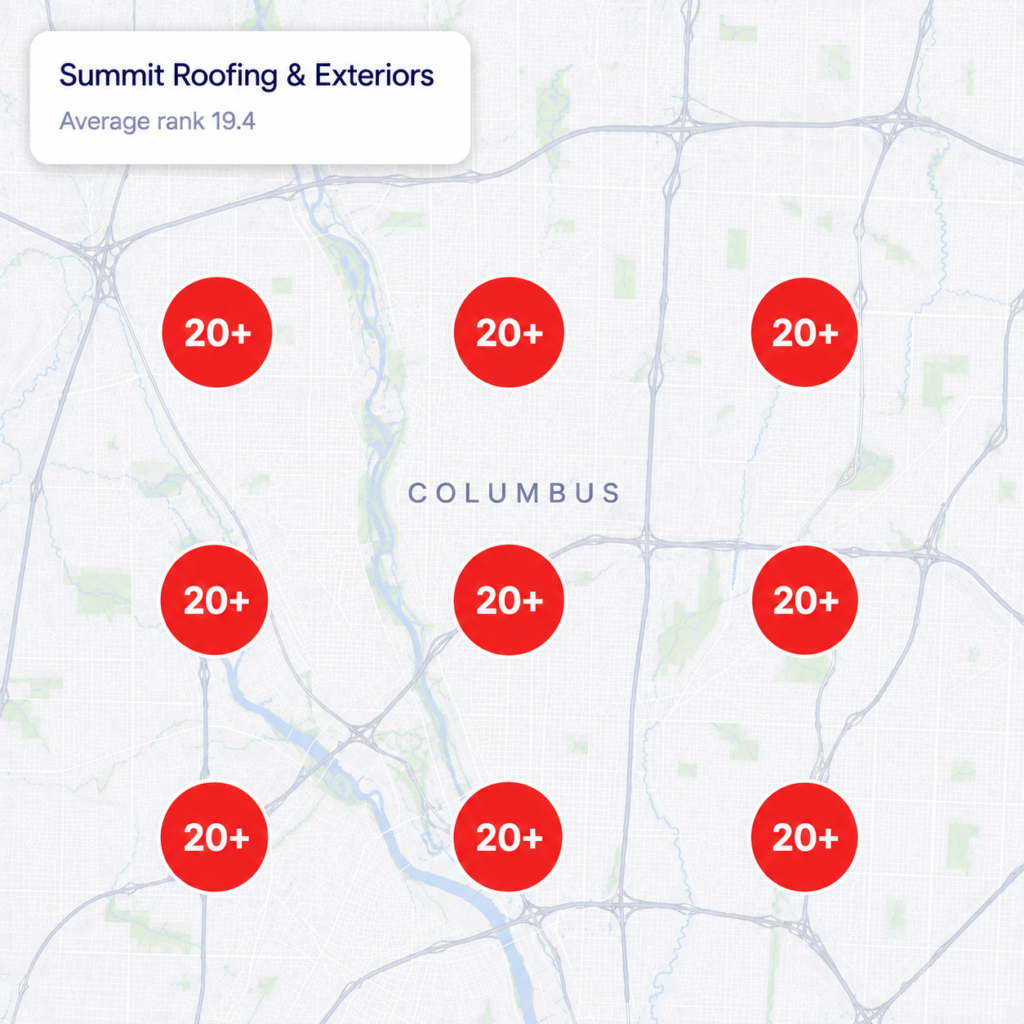
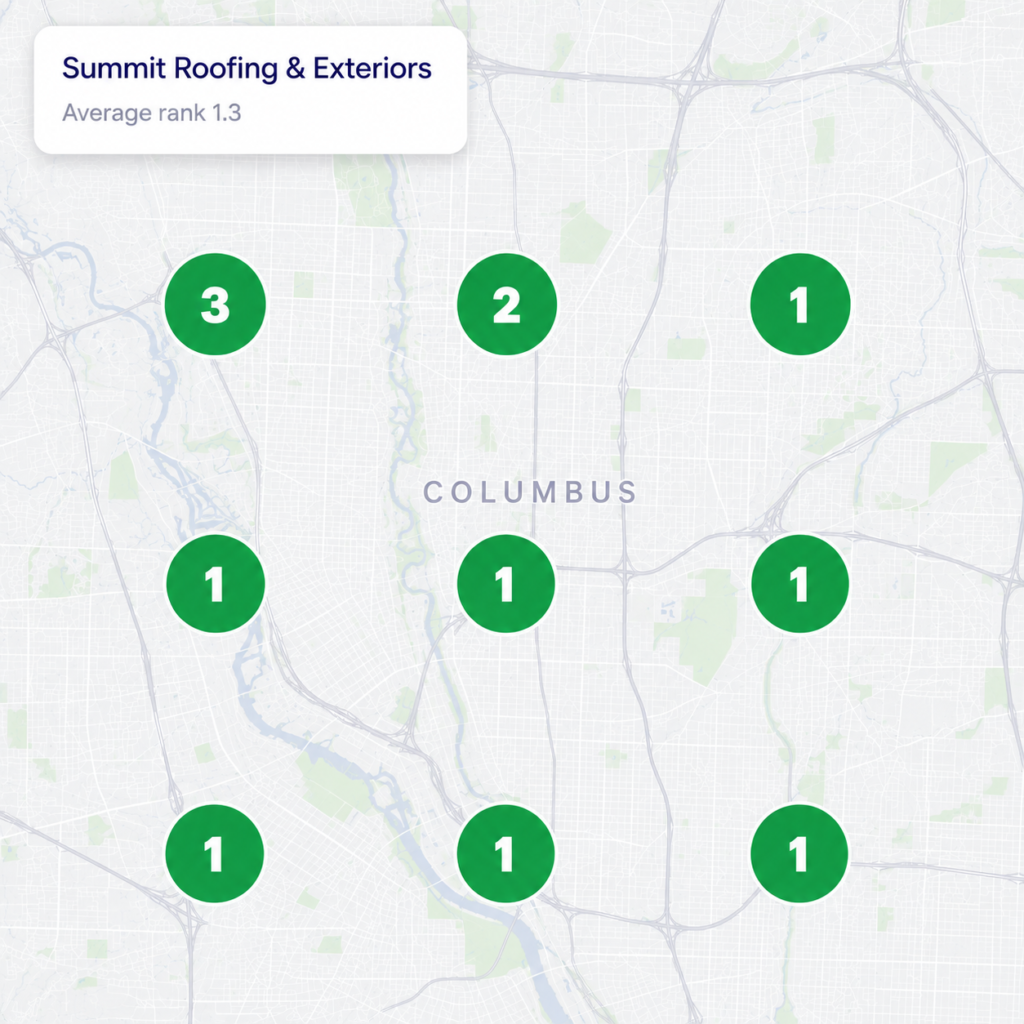
A single average position hides the truth. We scan a nine point grid across your
service area so you can see exactly which suburbs you own and which ones you
have never appeared in.

AVERAGE GRID RANK
19.4 1.3
GRID POINTS IN TOP 3
0 of 9 9 of 9
CALLS FROM MAPS
44 175
GBP insights screenshot placeholder

Profile insights

Calls, direction requests and website clicks from the profile.

grid scan history screenshot placeholder

Grid scan history

Every scan since we started, suburb by suburb.

call tracking screenshot placeholder

Call log, scored

Tracked calls tied back to the map listing that produced them.

What is included

Six workstreams aimed squarely at the map pack. Each one has an output you can
point at in the dashboard.

01

Entity foundation

Your business described consistently everywhere it appears, with services, territory and specialisms stated the same way across the site, the profile and every directory.

Consistency Sameas links Territory
02

Structured data

Organization, LocalBusiness, Service and FAQ schema deployed properly so machines can read what you do without inferring it from your copy.

Schema FAQ markup Validation
03

Answer led content

Pages written to answer the questions people actually ask assistants, in a form that can be quoted directly rather than summarized away.

Q and A format Specifics Quotable
04

Citation building

Placement in the directories, association listings and local sources the assistants pull from when they check whether a business is real.

Directories Associations Local sources
05

Review signals

Volume, recency and the substance of what reviews actually say. Assistants read review text, not just the star rating, and repeat the language customers use.

Volume Recency Review text
06

Assistant tracking

Weekly checks across ChatGPT, AI Overviews, Perplexity and Gemini for your main service terms, with a record of who is being named instead of you.

Weekly checks 4 assistants Competitor tracking

Reviews are a ranking factor, not a vanity metric

Volume, recency, rating and whether you reply all feed the map pack. A business with 180 recent reviews and an owner who answers them will outrank a better company with 40 reviews from 2021, every time.

We automate the ask after every completed job, route unhappy customers to you privately first, and draft a reply to every review that lands.

88%

Read reviews before calling a local business

3 mo

How quickly a review starts losing weight

2x

Reply rate lift when the owner answers

Job marked complete

The request goes out by text within the hour, while the work is still fresh.

Unhappy customers routed to you

A private form first, so problems reach you before they reach Google.

Every review answered

We draft the reply, you approve it. Google reads the replies too.

What the first six months actually look like

GEO moves on a similar timeline to organic, because it depends on the same corroboration work. The tracking starts immediately so you can see the shift.

WEEK ONE

Baseline and audit

Every main service term run through all four assistants and recorded, so you can see who is being recommended in Columbus today.

EXPECT TO SEE

A list of who gets named instead of you

WEEKS 2 TO 4

Entity and schema work

Business information made consistent everywhere, structured data deployed, contradictions between sources cleaned up.

EXPECT TO SEE

Assistants describing you correctly

MONTHS 2 TO 3

Answer content and citations

Question led content published, citation and directory work running, review signals strengthened.

EXPECT TO SEE

First appearances in AI Overviews

MONTHS 3 TO 6

Corroboration compounds

More third party sources repeating the same facts, more reviews, more references, tracked weekly per assistant.

EXPECT TO SEE

Named in the answer, ideally first

Six months on, four trades

A single average position hides the truth. We scan a nine point grid across your
service area so you can see exactly which suburbs you own and which ones you
have never appeared in.

Roofing

Columbus and Dublin
6 months
roofing grid scan screenshot placeholder
1.3

Avg grid rank, from 19.4

175

Calls a month, from 44

189

Reviews, from 61

HVAC

Westerville and Powell
8 months
HVAC profile insights screenshot placeholder
9 of 9

Grid points in top three

132

Booked jobs a month

4.9

Rating, from 4.3

Plumbing

Hilliard and Gahanna
5 months
plumbing map screenshot placeholder
#1

Emergency plumber, 3 suburbs

89

Calls a month, from 21

62%

Calls now from Maps

Landscaping

New Albany and Delaware
7 months
landscaping results screenshot placeholder
7 mi

Ranking radius, from 2 mi

64

Quote requests a month

3.8x

Return on retainer

Built for home service companies

Every trade searches differently. A burst pipe is an emergency search on a phone at
11pm, a kitchen remodel is six weeks of research on a laptop. We build the strategy
around which one you sell.

Roofing

Storm season spikes, high ticket, insurance driven

HVAC

Two hard seasons, maintenance plans in between

Plumbing

Emergency intent, mobile, decided in minutes

Electrical

Trust and licensing questions dominate

Landscaping

Seasonal, visual, review and photo led

Garage doors

Broken spring today, replacement next month

Pest control

Recurring contracts, fast response wins

Remodeling

Long research cycle, portfolio is the pitch

How AI assistants choose which business to recommend

Ask ChatGPT for a roofer in Columbus, Ohio and it will name two or three. It is not ranking them the way Google does. It is assembling an answer from what it can retrieve and what it can verify, and three things decide whether you are in it.

Retrieval: can it find and read your pages

Assistants pull live pages before they answer. If your content only appears after JavaScript runs, or the crawler is blocked, or the page takes six seconds, you are not in the candidate set at all.

Corroboration: does the web agree about you

A model will not stake an answer on a single source. When your site, your Google profile, directories and local coverage describe the same business the same way, you become safe to name. Contradictions get you dropped.

Extractability: is the answer easy to lift

Assistants quote sentences, not pages. A page that states the price range, the timeline or the process in one clear sentence gets used. A page that buries it in a paragraph of sales copy does not.

Timeline. Retrieval and formatting fixes can show up in AI answers within weeks, because there is no ranking queue to wait in. Corroboration takes longer, since it depends on other sites catching up.

Generative engine optimization is not SEO with a new name

The two overlap, but they are not the same job, and pretending otherwise is how agencies sell you the same work twice. Here is the honest split.

Where they overlap

Crawlability, page speed, clear structure, genuine expertise and links from credible sites help in both. If your SEO foundations are sound, a good share of the AI work is already done, and The Nerds SEO will tell you that rather than quoting you for it.

Where GEO is a different job

  • No position to hold. There is no number three in an AI answer. You are cited or you are absent.
  • Prompts, not keywords. People type whole sentences with budgets and constraints in them, which changes what you write.
  • The claim matters, not the page. A model quotes a sentence, so specific facts beat well written persuasion.
  • No rank tracker. Visibility has to be tested by prompting the assistants directly, one question at a time.
  • Off site consistency is heavier. One wrong service area in a directory can cost you the recommendation.

The GEO workstreams we run

Prompt research

The actual questions your customers ask an assistant, collected from calls, forms and search data.

Entity and citation audit

Every place the web describes your business, checked for agreement and corrected where it conflicts.

Answer first rewrites

Existing pages restructured so each customer question has a heading and a two sentence answer under it.

Structured data

Organization, LocalBusiness, Service and FAQ markup that matches the visible copy exactly.

Crawler access

Robots rules, rendering and speed checked for the AI crawlers specifically, not just Googlebot.

The content AI assistants actually quote

Assistants reach for reference material, not sales pages. These are the page types that earn citations for Columbus service businesses, and most competitors have none of them.

Cost and pricing pages

What a job costs in Central Ohio, with the ranges and the variables explained. The single most requested thing in AI conversations, and the thing businesses are most reluctant to publish.

Process and timeline pages

What happens on day one, how long the work takes, what the homeowner has to do. Concrete steps with real numbers in them get lifted whole.

Comparison pages

This material versus that one, repair versus replacement, doing it now versus waiting. Assistants are asked to compare constantly, and they need a source that already did.

Local specifics

Permit requirements, inspection rules, climate and housing stock across Columbus and the suburbs. Nobody else writes this down, which is exactly why it gets cited.

Question pages

One real customer question per heading, answered in the first two sentences, with the detail underneath and a link to the service page that sells the fix.

Facts over adjectives

Quality workmanship and customer focused cannot be quoted. A twelve to sixteen week lead time, a four hundred dollar diagnostic, a twenty five year warranty can be.

Named authorship

A page attributed to a licensed tradesperson with their credentials stated carries more weight than anonymous content, for assistants and for customers reading it.

Dates kept current

Pricing and code content with a review date, updated when it changes. Stale figures get quietly passed over in favour of whoever updated theirs.

How we track AI visibility when there is no rank tracker

Nobody can show you position four in ChatGPT, because there is no such thing. What can be measured is whether you get named, who gets named instead, and whether that is moving. The Nerds SEO tests it by hand every month.

A fixed prompt set, run monthly

Twenty to forty of your customers' real questions, run across ChatGPT, Gemini, Perplexity and Google AI Overviews, with the answers recorded so month to month change is visible.

Share of voice against competitors

How often you are named versus the other Columbus businesses in your trade. That ratio is the number worth watching, not any single answer.

Which page got cited, and which claim

When you are quoted we log the page and the sentence. That tells us what format is working and what to build more of.

Referral traffic from assistants

Visits arriving from AI tools, tracked separately in analytics, so you can see the enquiries it actually produces rather than taking the citations on faith.

In the report every month

  • Citations won and lost across the tested prompt set
  • Share of voice against your named competitors
  • Pages and claims that produced each citation
  • Entity corrections made off site, with the source fixed
  • Content shipped and the questions it answers
  • AI referral sessions and the enquiries they produced

What nobody can promise

Guaranteed placement in an AI answer. The models change, and anyone selling a guarantee is selling something they do not control. What we can do is make you the most citable option in your trade.

GEO and AI Search Optimization questions we get every week

If yours is not here, call and ask. We will give you a straight answer even if it means telling you not to hire us.

It depends on your trade. For research heavy purchases like remodeling, roofing replacement or anything expensive, a real share of customers now ask an assistant first. For an 11pm burst pipe, the map pack still owns it. We will tell you honestly where your trade sits rather than sell you a package you do not need.
There is overlap, because both reward clear structure and genuine authority. The difference is that ranking gets you into a list of ten, while GEO is about being one of two or three named in a paragraph. The content format and the citation work are aimed differently.
No, and be suspicious of anyone who says otherwise. The assistants change how they assemble answers regularly and none of them publish their criteria. What we can do is make you the most consistently described and most corroborated option in your category, then track the results weekly so you can see whether it is working.
We run your main service terms through all four assistants on a schedule and record who gets named, in what order, and whether your site is cited as a source. It is manual checking rather than a rank tracker, and you get the actual screenshots.
No. Most ready to buy local searches still happen in Maps, and that is not changing this year. GEO is additional coverage for the growing slice of customers who ask an assistant before they ever open Google.
Ranking well helps, because assistants often pull from sources that already rank. But it is not sufficient. We regularly see businesses at position one getting left out of the AI answer above them, because their content is not structured in a way that can be quoted.

Start with the grid scan.

We will scan your map rankings across every suburb you serve, audit your Google Business Profile and citations, and show you exactly where the calls are going instead.

PHONE 614-908-2515
WEBSITE Thenerdseo.com
HOURS Mon to Fri, 8am to 6pm

Get your free grid scan

Tell us your main service and the towns you serve. We will send back the map showing where you rank in each one.

No contract pitch on the first call.